Key takeaways
- Bakersfield averages about 33 days a year at 100°F or higher (National Weather Service, via The Bakersfield Californian).
- Artificial turf gets much hotter than grass in direct sun. A UNLV and Desert Research Institute study recorded green turf as high as 169°F, about 69°F hotter than irrigated grass.
- Bermuda sod is built for heat and uses about 20% less water than tall fescue during the growing season (UC Agriculture and Natural Resources).
- Sod costs far less upfront; turf saves water and mowing. Many Bakersfield yards use both.
The short answer
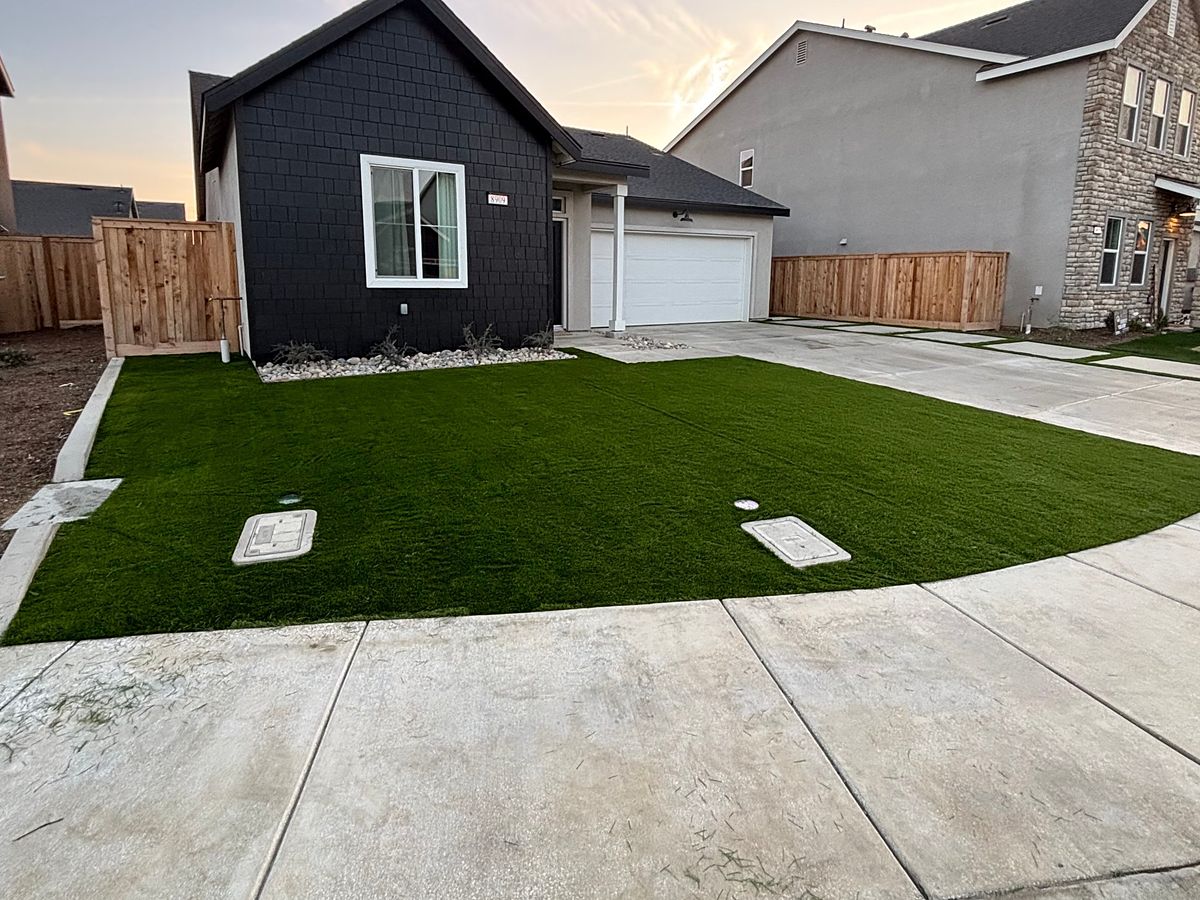
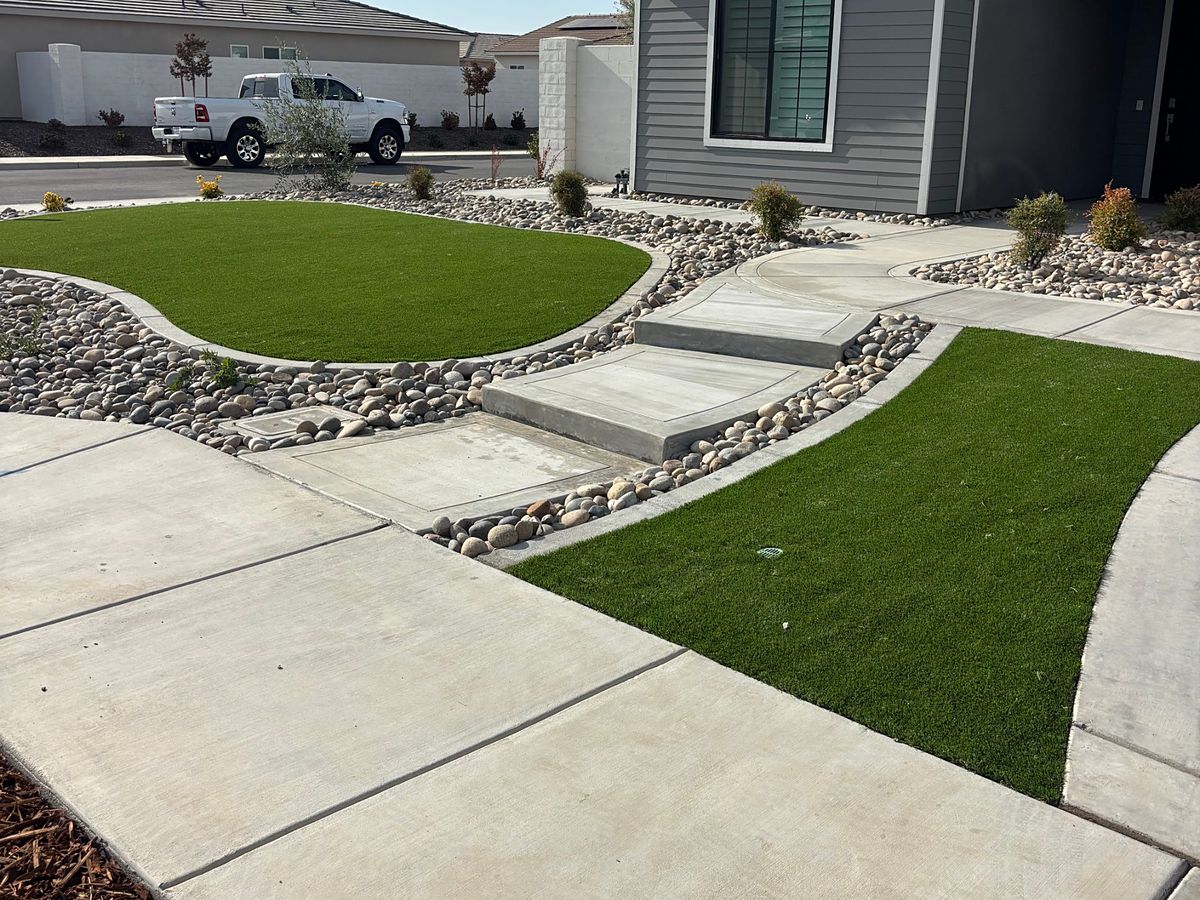
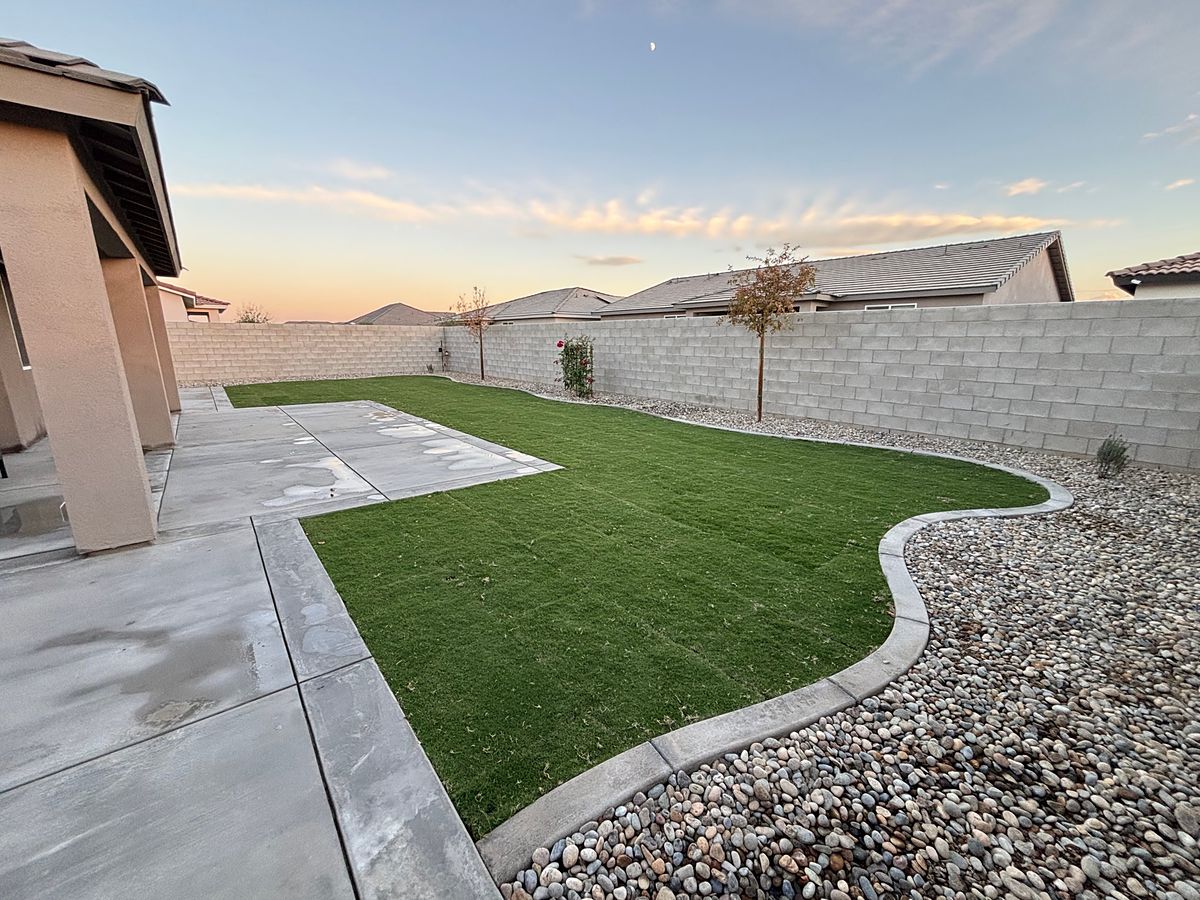
Choose sod (usually Bermuda) where people will play barefoot in the afternoon and you want the coolest surface. Choose artificial turf where you want zero mowing and little water, like front yards, narrow side yards and dog runs, and plan shade or a quick rinse for summer afternoons. Plenty of homeowners do turf in front and sod in back.
How hot it gets
Bakersfield’s heat is the whole story here. The city averages about 33 days a year at or above 100°F, and the stretch from mid-July to the start of August carries the highest average highs of the year, around 99°F.
Natural grass cools itself by moving water through its leaves. Artificial turf can’t. Researchers at UNLV and the Desert Research Institute measured green synthetic turf reaching 169°F, roughly 69°F hotter than irrigated natural grass. The study’s author suggested more reflective, lighter colors to bring surface temperatures down. A 2015 study of newer “cool” turf products found they ran cooler than standard turf but still much warmer than natural grass.
Water use
Turf needs almost no irrigation, just an occasional rinse. Sod needs regular summer watering, but the grass type matters a lot. UC Agriculture and Natural Resources reports that warm-season grasses like Bermuda need about 20% less water than cool-season grasses like tall fescue during the growing season. UC Riverside puts the summer difference closer to 40%. In Bakersfield heat, that makes Bermuda the practical sod choice.
Cost
Sod is the cheaper install: about $1.70 to $2.60 per square foot professionally installed, per Lawn Love’s 2026 data. Artificial turf commonly runs about $8 to $14 per square foot installed for a residential yard. See our artificial turf cost guide for example budgets.
Upkeep and looks through the year
Sod needs mowing, fertilizing and a working sprinkler system. Bermuda also goes dormant and turns tan in winter, which UC Riverside notes is the main complaint Californians have about warm-season grass. Turf stays green year-round and needs brushing in high-traffic areas, a rinse now and then, and pet cleanup if you have dogs.
Side-by-side
| Bermuda sod | Artificial turf | |
|---|---|---|
| Summer surface heat | Stays near air temperature | Can run far hotter in direct sun |
| Water | Regular summer watering | Occasional rinse |
| Installed cost | About $1.70 to $2.60 / sq ft | About $8 to $14 / sq ft |
| Upkeep | Mow, fertilize, water | Brush, rinse |
| Winter look | Dormant, tan | Green |
| Best for | Play areas, backyards | Front yards, side yards, dog runs |
What we recommend most often
For new-construction homes, a common plan is turf or rock with drip-fed plants in the front yard (low upkeep, looks the same in August as in March) and Bermuda sod in the backyard where kids and dogs play, with a shade tree or patio cover nearby. Concrete curbing between them keeps both edges clean.
Sources
- The Bakersfield Californian: Record broken for consecutive days of 105 or above (NWS data)
- 23ABC: Bakersfield’s hottest stretch of the year
- UNLV: Study finds artificial turf may be too hot for summer use
- Australian Catholic University: Surface temperatures of synthetic turf systems vs. natural grass (2015)
- UC ANR: Turfgrass crop coefficients
- UC Riverside: Drought-friendly bermudagrass
- Lawn Love: Sod cost 2026
Prices are national and California estimates from the sources above, not Valley Oak quotes. Every yard is priced after an on-site visit.